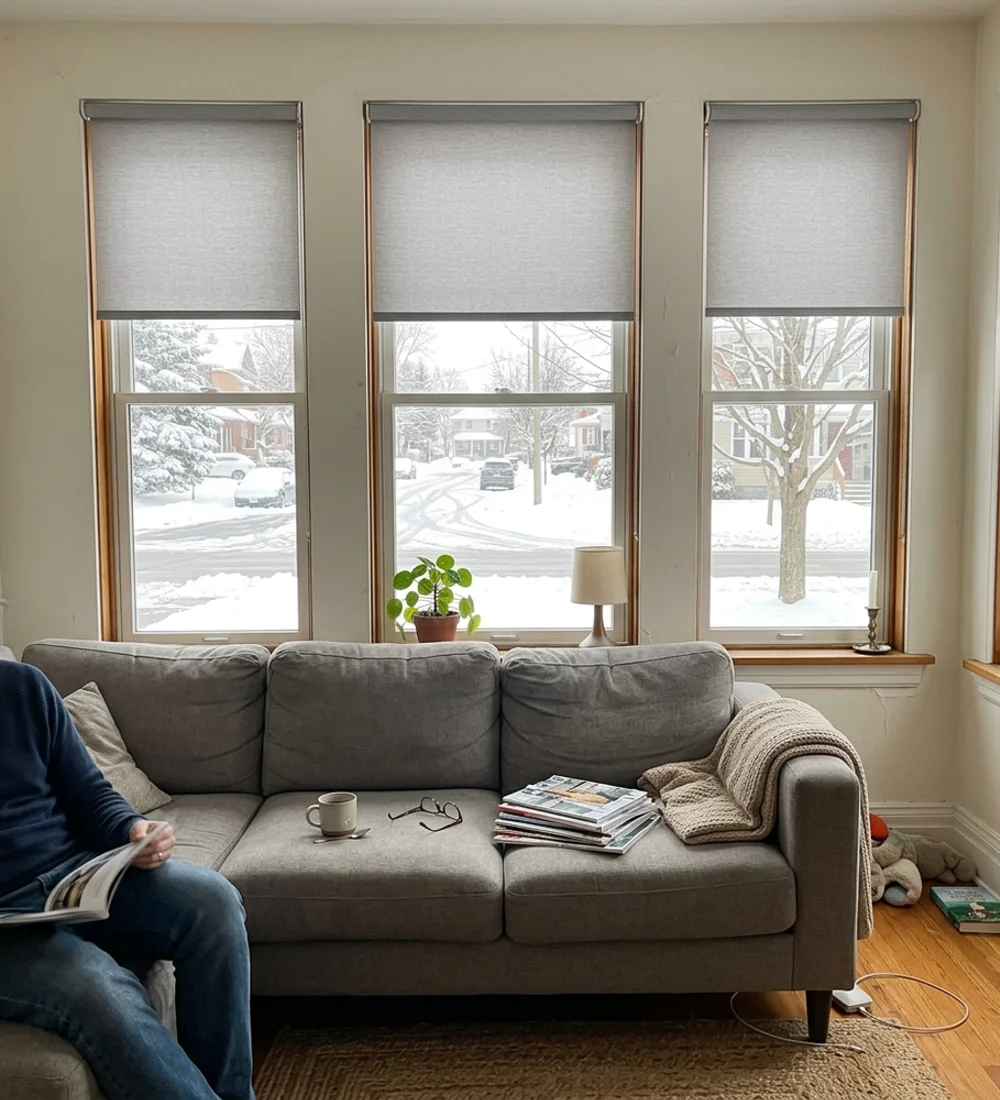
Types of Roller Blinds We Install in Ottawa
A roller blind is one piece of fabric wound on a tube, with a weighted hem bar at the bottom. That simple design is why rollers are the most common blind we install. The fabric you pick decides almost everything else.
Light-Filtering Roller Blinds
Light-filtering fabrics soften daylight and give daytime privacy without turning the room dark. They suit living rooms, kitchens and dining rooms where you want the window to stay bright. We carry woven and vinyl-backed options, many with Greenguard Gold certification for low emissions, which matters in kids’ rooms.
Blackout Roller Blinds
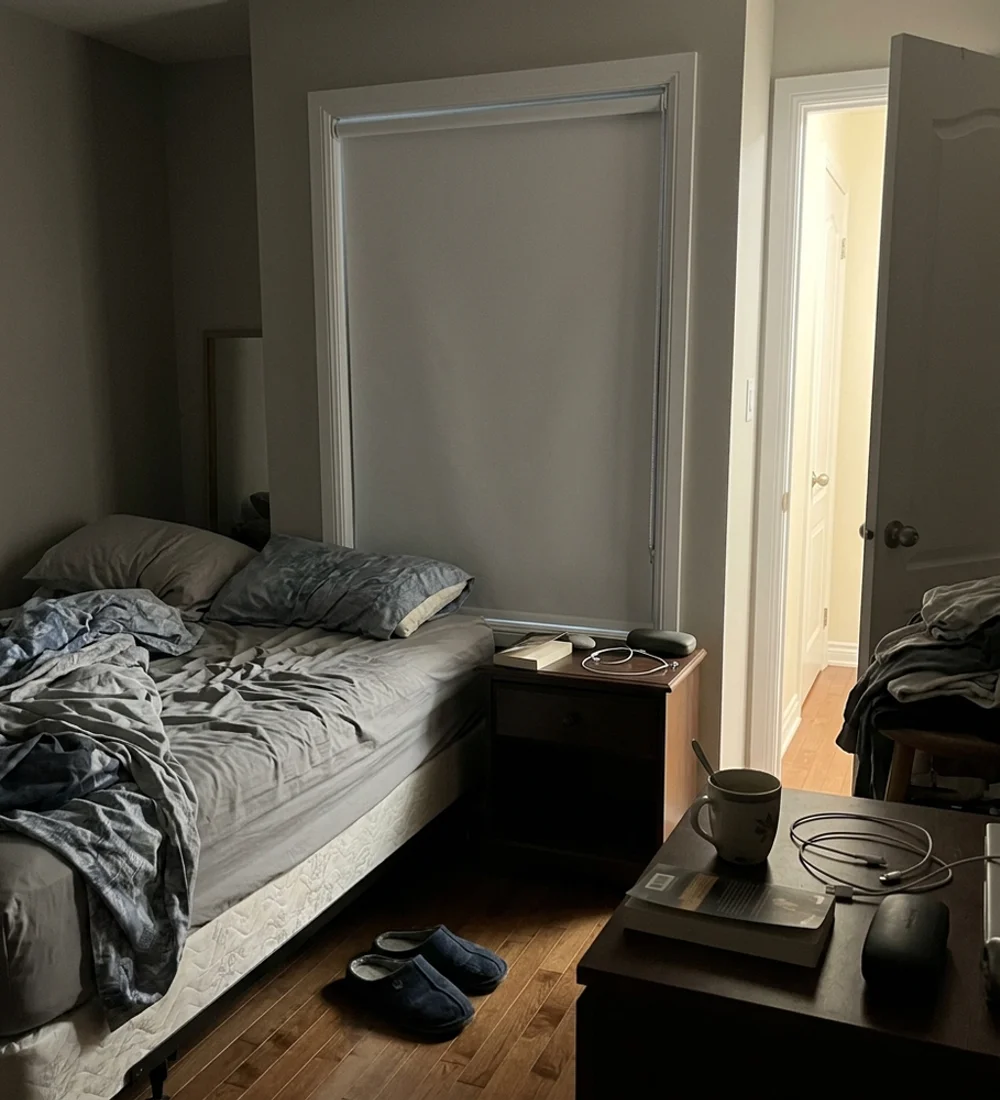
Blackout rollers use a fabric with a blackout backing that stops light through the material. On their own, they still leave a light gap at each side. For bedrooms and nurseries we pair them with side channels or a cassette valance, which closes that gap.
Dual-Shade Roller Blinds
A dual bracket holds two rollers on one mount: a sheer or solar shade in front for daytime and a blackout behind for night. You get two looks from one window without stacking a curtain rod on top.
Cordless Roller Blinds
Cordless rollers lift and lower by hand from the hem bar using a spring mechanism. There is no continuous cord loop hanging down, which is the safest setup for homes with toddlers or pets.
Motorized Roller Blinds
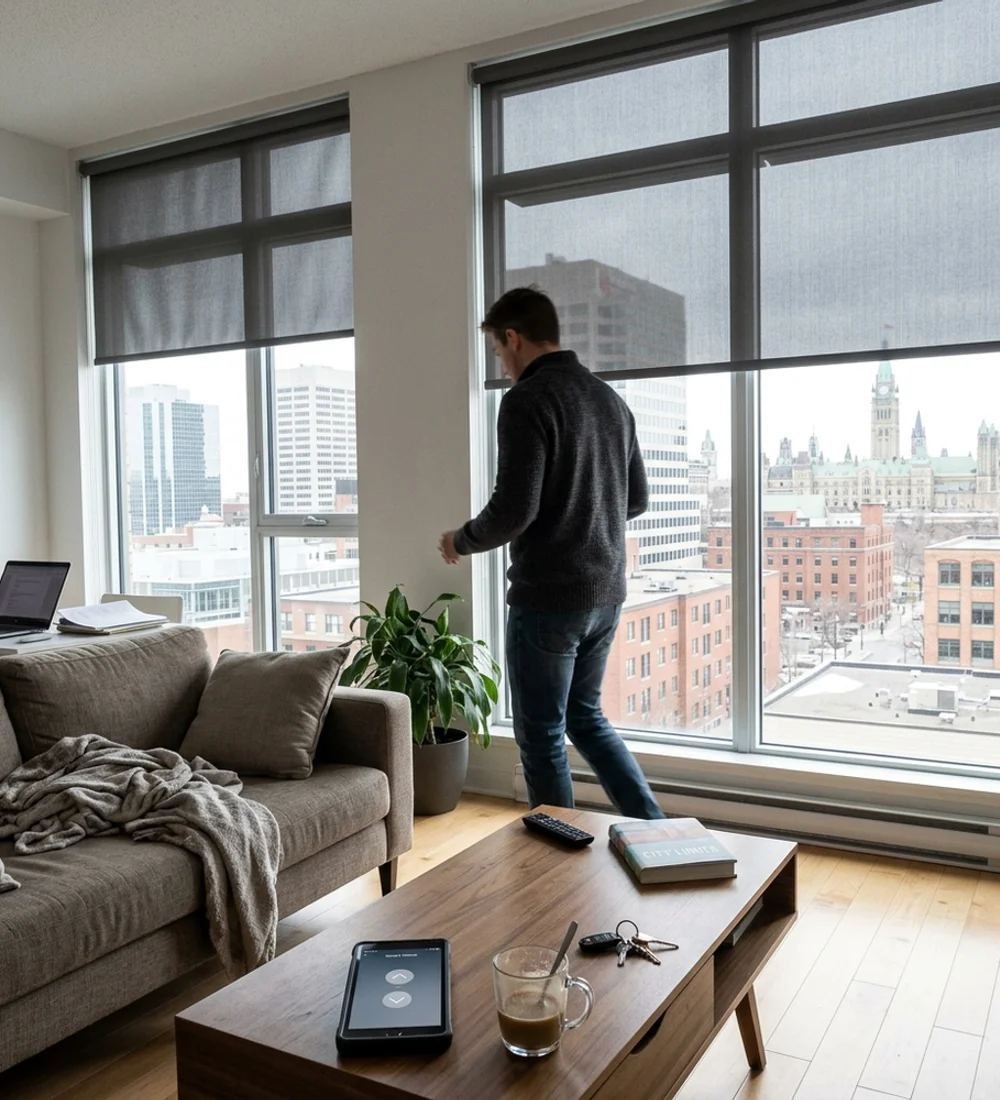
Rollers are the easiest blind to motorize. A tubular motor sits inside the roller tube, out of sight, and runs from a remote, an app, Alexa or Google Home. We install Hunter Douglas PowerView, Somfy and Lutron systems.
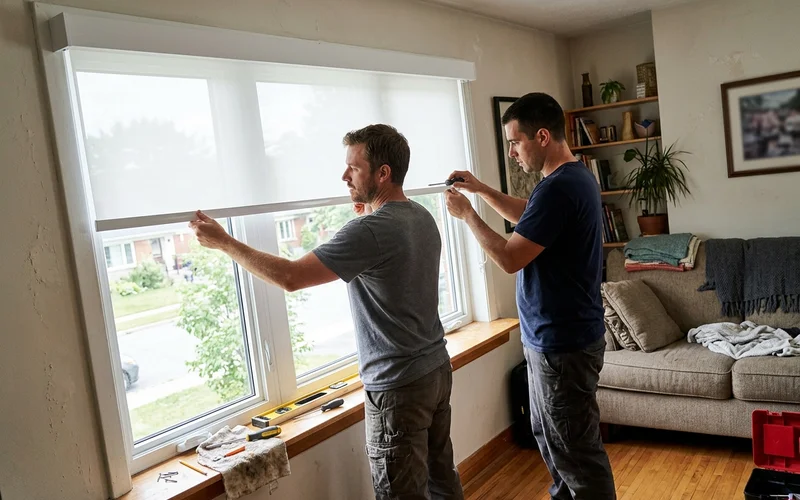
The 5 Roller Blind Fabric Weaves Every Ottawa Homeowner Should Know
Roller fabric is not one product. These five weaves cover almost every order we write, and each one behaves differently in an Ottawa room.
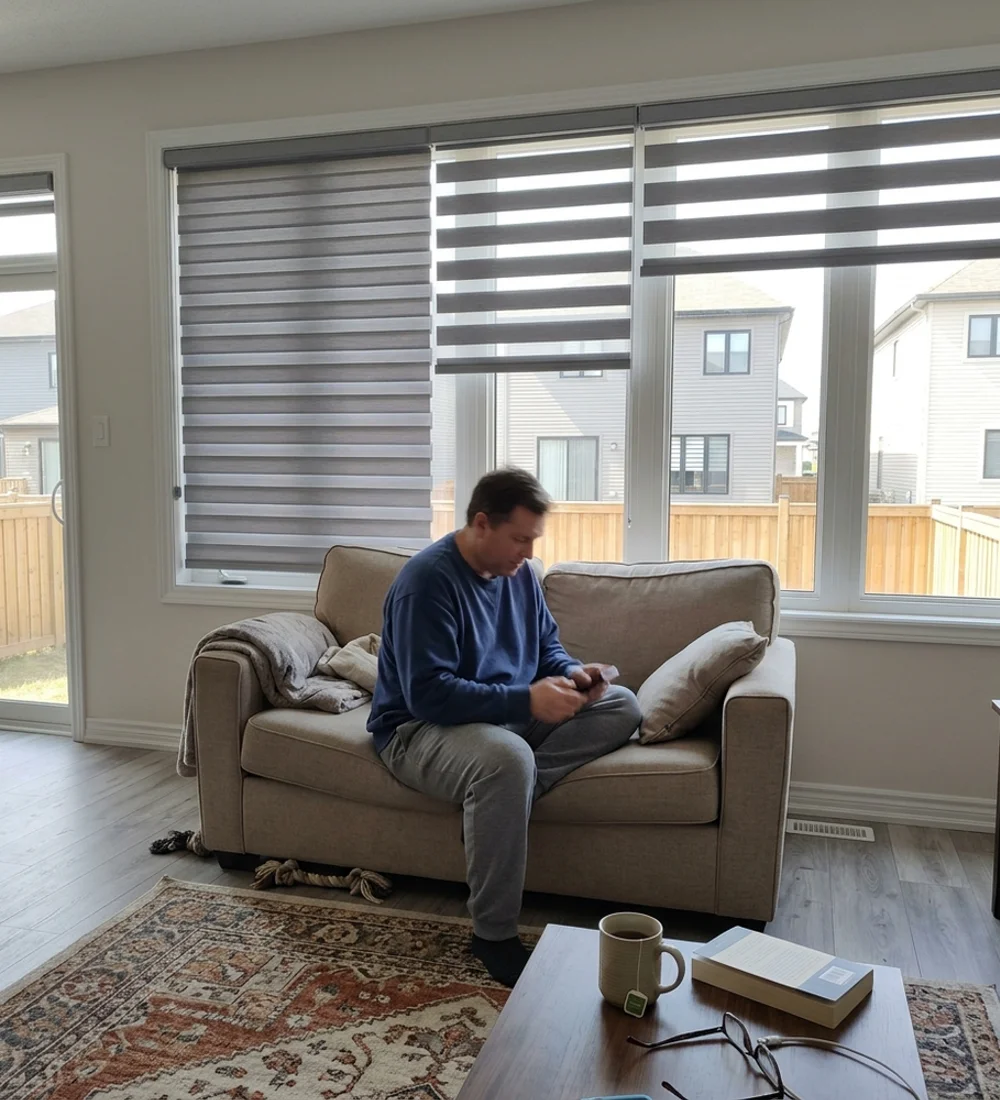
- Sheer weave. Very open, mostly decorative. Softens light and gives a little daytime privacy, but you can see shapes through it at night.
- Light-filtering weave. The everyday choice. Blocks the view in from the street during the day while the room stays bright.
- Solar screen weave. A woven PVC-coated polyester rated by openness factor (1%, 3%, 5%, 10%). Cuts glare and UV, keeps your view out. Many solar fabrics also meet NFPA 701 for flame resistance, which matters in condos and offices.
- Room-darkening weave. Dense enough to drop a room to dusk. Good for living rooms with TVs.
- Blackout fabric. Coated or laminated so no light passes through the fabric itself. Needs edge control to be truly dark.
Nine times out of ten, the right answer in a house is two of these: solar or light-filtering in the main living space and blackout upstairs.
What Stops Ottawa Homeowners From Buying Roller Blinds?
Price shock. In our opinion, rollers are the best value in the whole lineup. At $180-$600 per window installed, a standard bedroom is near the low end. The jump comes from wide windows, blackout with side channels and motors, and every one of those is itemised on the quote so you can drop what you do not need.
Custom vs stock. Stock rollers from a big-box store come in fixed widths and get cut at the store. On an Ottawa window that is out of square by a quarter inch, that leaves a gap on one side. Ours are cut to the sixteenth of an inch after an in-home measure.
Is motorization worth it? For a hard-to-reach window, a two-storey great room or a south wall you want closed at 2pm every summer day, yes. For a single bathroom window, probably not.
Delivery timeline. Custom rollers take about 3-4 weeks. If you are racing a move-in date, 2-week rush is $150-$450.
How Much Do Roller Blinds Cost in Ottawa?
Installed prices in CAD, including measurement, delivery and install:
| Roller option | Typical installed price |
|---|---|
| Light-filtering roller, standard window | $180-$320 |
| Solar screen roller (1%-10% openness) | $220-$420 |
| Blackout roller with side channels | $300-$600 |
| Dual-shade roller on one bracket | $380-$600 |
| Battery motor add-on | $550-$1,800 per window total with motor |
Every quote itemises measurement, materials, manufacture, delivery and install separately, and pricing is never gated behind a sales call. See the full Ottawa rate card for every blind type.
Solar Roller Shades: What Openness Factor Do You Need?
Openness factor is the percentage of the fabric that is open weave. A 1% screen lets through very little light and almost no glare, but your view out is reduced. A 10% screen keeps most of the view and cuts less heat. For west-facing offices in Kanata and big south glass in Orleans condos, 3% is the sweet spot for screen glare. For living rooms where you mostly want to see the yard, 5% works well. Darker fabric colours give a clearer view out than white, even at the same openness. Solar screens do not give night privacy, because once the lights are on inside you can see in. That is where a dual roller helps.
Dual Roller Blinds: Day and Night Shades on One Bracket
A dual roller puts two shades on one dual bracket, each with its own clutch or motor. The front is usually a solar screen or light-filtering fabric, the back is blackout. You run the front during the day and drop the back at bedtime. They need about 3.5 inches of depth for an inside mount, so we check jamb depth at the measure. If the recess is too shallow, we mount outside the frame with a fascia that hides both rollers. Dual rollers run $380-$600 per window installed in most Ottawa homes.
How to Fix a Roller Blind That Won’t Roll Up
Most stuck rollers have one of three problems. First, the fabric has drifted to one side and is rubbing the bracket. Lower it fully, then re-roll by hand keeping it centred. Second, the clutch has worn out and slips when you pull the chain. That is a part swap, not a new blind. Third, on spring rollers, the spring has lost tension. If yours is a newer Rollease Acmeda clutch system, parts are easy to find. Our blind repair and restring service runs $85-$250 per blind, and we will tell you honestly when the fabric is too faded or brittle to be worth fixing.